How to Use a Wand Massager for Back Pain Relief: A Complete Guide
If you’ve ever ended a long workday with a tight, aching back — you’re not alone. Studies suggest that up to 80% of Americans will experience back pain at some point in their lives, making it one of the most common reasons people miss work and seek medical care.
The good news? You don’t always need an expensive massage therapist or a prescription to find relief. A wand massager, used correctly, can deliver genuine, targeted muscle relief at home — on your schedule.
This guide will walk you through exactly how to use a wand massager for back pain, which areas to target, techniques that work, and what to avoid.
Why Wand Massagers Work for Back Pain
Before diving into technique, it helps to understand why vibration therapy is effective for back pain.
When muscles are tight or strained, blood flow to the area is restricted. This creates a cycle: less circulation means slower healing, which means prolonged pain and stiffness. Vibration from a wand massager does several things simultaneously:
- Increases local blood circulation, bringing oxygen and nutrients to sore tissue
- Stimulates the nervous system in a way that interrupts pain signals — a process called “gate control theory” in pain science
- Encourages muscle relaxation by triggering the body’s natural relaxation response
- Reduces muscle tension and knots through sustained vibration on tight spots
Research backs this up. A comprehensive review of studies published in medical literature found massage to be effective for short-term relief from low back pain. The Magic Wand itself is registered with the FDA as a Class I therapeutic electric massager — the same category as professional physical therapy devices.
What You’ll Need
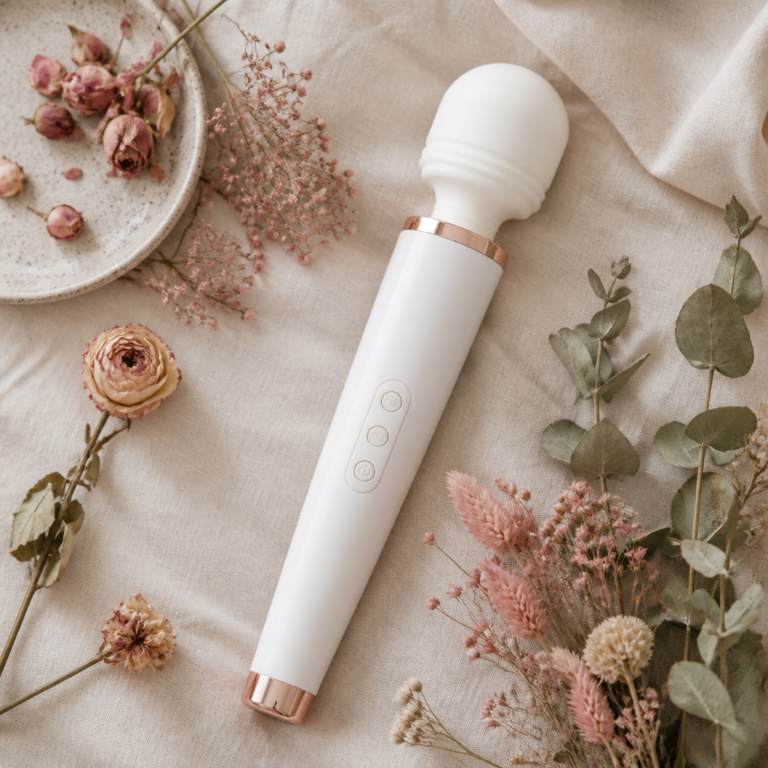
- A wand massager (corded or cordless — both work)
- A firm surface to sit or lie on (bed, yoga mat, or firm couch)
- Optional: a small pillow for positioning support
- 10–20 minutes of uninterrupted time
You don’t need any lotions or oils for wand massage unless you’re using an attachment that benefits from slip. Most wand heads work fine directly through light clothing, which is actually recommended for sensitive areas.
The 5 Key Areas to Target for Back Pain
1. Lower Back (Lumbar Region)
This is the most common site of back pain — the area just above the hips and below the ribcage. The muscles here (called the lumbar paraspinals) work constantly to keep you upright and are frequently overworked from sitting, lifting, or standing.
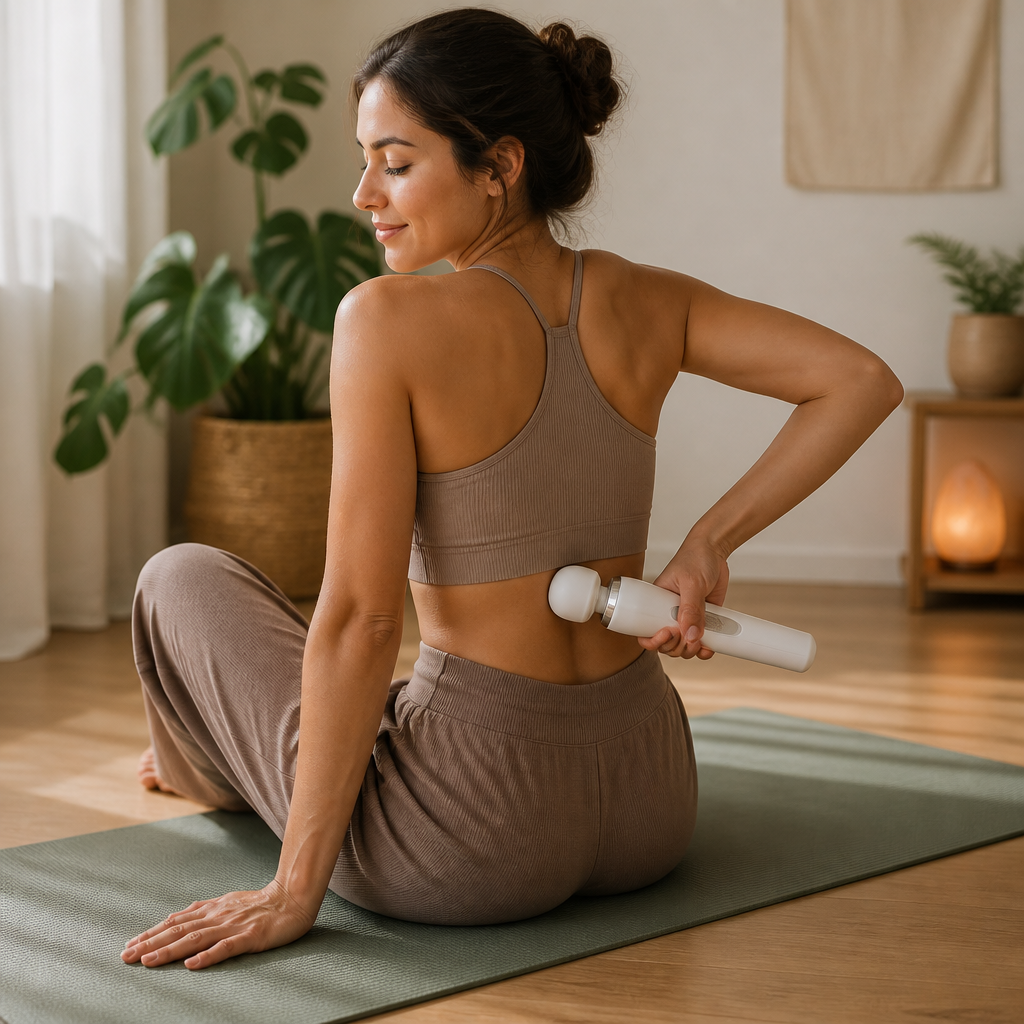
How to reach it: Sit in a chair and reach behind you, or lie on your side and pass the wand behind your back. Some people find it easiest to lie face-down on a firm surface and ask a partner to assist, though most wands have long enough handles to reach solo.
2. Mid-Back (Thoracic Region)
Often neglected, mid-back tension is common in people who sit at desks or hunch over phones. You’ll feel tightness between and around the shoulder blades.
How to reach it: A wand’s long handle makes the mid-back more accessible than you’d expect. Reach over your shoulder from above or under your arm from below to target different areas.
3. Upper Back and Shoulder Blades (Rhomboids and Trapezius)
Tension here is almost universal among desk workers and people who carry stress in their shoulders. These muscles connect your spine to your shoulder blades and are constantly active.
How to reach it: Most easily accessed by reaching over your shoulder and working the wand down the muscle. A partner makes this much easier for the middle of the upper back.
4. Hips and Glutes
Often overlooked, tight hip and glute muscles are a major contributor to lower back pain. When the glutes are tight, they pull on the lower back and pelvis, creating referred pain that feels like it originates in the back.
How to reach it: Sit on a firm surface and place the wand directly on the glute muscle. Or lie on your side and reach around to target the outer hip.
5. Sides of the Torso (Quadratus Lumborum)
The QL — the deep muscle running along each side of your lower back — is often the hidden culprit in stubborn back pain. It can be hard to reach, but worth the effort.
How to reach it: With the wand, target the area between the top of your hip bone and the bottom of your ribcage, on each side of your spine. Work slowly — this area can be sensitive.
Step-by-Step Technique Guide
Step 1: Start on the Lowest Setting
Always begin on your lowest vibration intensity, especially if this is your first time or if you’re dealing with acute pain. High intensity on an already-inflamed muscle can increase discomfort rather than reduce it.
Give your muscles a minute or two to “accept” the vibration before increasing intensity.
Step 2: Keep the Wand Moving
Avoid holding the wand completely still on one spot for more than 15–20 seconds at a time. Instead, use slow, gliding strokes along the muscle — moving parallel to the muscle fibers (usually up and down the spine, not side to side).
Think of it like ironing: smooth, deliberate strokes rather than pressing down hard in one place.
Step 3: Slow Down When You Find a Tight Spot
When you encounter a knot or particularly tight area, slow down but don’t stop entirely. Use gentle back-and-forth movements over that spot for 20–30 seconds, then continue gliding. You can return to the same spot multiple times in a session.
Step 4: Breathe Consciously
This sounds simple but makes a real difference. Many people unconsciously tense up when applying pressure to a sore area. Slow, deep breathing signals to your nervous system that it’s safe to relax, making the massage significantly more effective.
Inhale before you apply the wand, exhale as you work over the sore area.
Step 5: Gradually Increase Intensity
Once your muscles have warmed up (after 3–5 minutes), you can increase the vibration setting if needed. Most people find a medium setting most effective for back pain — high intensity is not always better and can sometimes cause temporary soreness.
Step 6: End with Gentle Strokes
Finish each area with lighter, gliding strokes at low intensity. This helps the muscle transition out of treatment and reduces post-massage soreness.
How Long and How Often?
Per session: 10–20 minutes total is ideal for most people. Spending more than 15 minutes on any single muscle group is generally not necessary.
Per area: 2–5 minutes per muscle group. Don’t linger too long on one spot.
Frequency: For chronic back pain, daily use is fine and often beneficial. For acute injury or post-workout soreness, using it once or twice daily is appropriate. Always listen to your body — if an area feels worse after massage rather than better, give it a day to rest.
What NOT to Do
Knowing what to avoid is just as important as knowing the right technique:
Do not massage directly over the spine. The bony vertebrae of your spine should never be directly targeted with vibration. Always keep the wand on the muscle tissue on either side of the spine, never directly on it.
Avoid inflamed or injured areas. If you have a recent injury, acute muscle strain, or any area that’s visibly swollen or bruised, skip that spot entirely until it’s healed. Massage on an acutely inflamed area can worsen inflammation.
Don’t press too hard. Unlike a massage gun, wand massagers work through vibration, not percussion. You don’t need to apply significant downward pressure. Let the vibration do the work.
Skip it if you have certain conditions. People with blood clots, nerve conditions, recent surgeries, or osteoporosis should consult a doctor before using vibration therapy on any part of the body.
Avoid using over clothing with metal elements. Zippers, buttons, or underwire can interfere and create discomfort. Use directly on bare skin or light, smooth fabric.
A Simple 15-Minute Back Pain Routine
Here’s a practical routine you can follow:
Minutes 1–3: Lower back warm-up Low intensity, slow gliding strokes from the top of the hips upward on each side of the spine. Don’t press hard — just warm up the tissue.
Minutes 4–7: Mid and upper back Increase to medium intensity. Target the area between and around the shoulder blades. Take your time finding tight spots and working through them with slow movement.
Minutes 8–11: Lower back focus Return to the lower back at medium intensity. Spend extra time on any spots that felt particularly tight in the warm-up. Use the breathing technique here.
Minutes 12–14: Hip and glute release Move to the glutes and outer hips. These often provide surprising relief for lower back pain. Use medium intensity and slow circular movements.
Minutes 14–15: Cool-down Drop back to low intensity and do smooth, long strokes along the full length of the back on each side. This signals the muscles to relax and transition.
When to See a Doctor Instead
Wand massage is a wellness tool, not a medical treatment. See a healthcare provider if:
- Your back pain follows a fall, accident, or injury
- Pain radiates down one or both legs (possible sciatica or nerve issue)
- You have numbness, tingling, or weakness in the legs
- Pain is severe and doesn’t improve with rest
- You have unexplained weight loss alongside back pain
- Pain is worst at night or when lying down
These symptoms can indicate conditions that need professional evaluation before self-treatment.
The Bottom Line
A wand massager is one of the most practical tools you can add to your at-home wellness routine for back pain. Used correctly — low intensity to start, keeping the wand moving, breathing consciously, avoiding direct pressure on the spine — it can deliver real, consistent relief for the everyday back tension that so many of us live with.
The key is consistency. One session helps. A daily routine changes things.
This article is for informational purposes only and does not constitute medical advice. Always consult a healthcare professional for persistent or severe pain.